

 Skip to content
Which Chemical Peel Is Best for Acne Scars, Pigmentation, and Melasma?
Acne scars usually call for medium-depth peels, general pigmentation responds well to lighter resurfacing over a series, and melasma needs the gentlest hand of all. If you’ve been staring at the same spots in the mirror for months, that distinction matters more than you might expect. That is where Chemical Peels at Artmedica Aesthetics fit in.
The right chemical peel depends on your concern. Acne scars usually respond to medium-depth TCA peels; general pigmentation fades with glycolic or TCA peels over a series, and melasma needs gentler, conservative options to avoid rebound darkening.
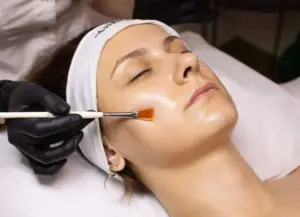
A chemical peel works by applying a controlled solution that loosens and removes damaged surface layers of skin. As those tired, uneven layers shed, fresher and more even skin takes their place. It sounds dramatic; however, the depth of the peel is what really decides everything.
Peels come in three depths. Superficial peels affect only the outermost layer & are suitable for mild concerns. Medium peels reach a little deeper to address texture & more stubborn discoloration. Deep peels go further still and are reserved for significant damage, usually under close supervision.
Depth is only half the story. The acid does the heavy lifting, & each one behaves differently:
One thing worth saying early: stronger is not automatically better. For skin that scars or discolors easily, an aggressive peel can cause the very problem you’re trying to fix. This is a skin resurfacing treatment, not a competition, & the right strength beats the strongest strength every time.
A peel for acne scars depends on whether you’re fighting active breakouts or the marks they left behind. They are not the same job. If acne is still flaring, a superficial salicylic peel helps calm oil & clear congestion before you tackle texture.
True scarring, the dented kind, asks for more. Medium-depth TCA peels are a common choice for rolling & boxcar scars because they reach the layer where that texture lives & encourage the skin to remodel over time.
The improvement is gradual. Most patients see softer, smoother skin over a series of treatments rather than after a single visit, and results vary from person to person. It’s also fair to set expectations on icepick scars, those deep, narrow pits.
A peel for acne scars can improve the skin around them, but icepick scars often require additional treatments to achieve real change. A good provider will tell you that upfront rather than oversell a single peel.
For everyday pigmentation, glycolic & TCA peels are the workhorses. This covers sun spots from years of accumulated exposure & post-inflammatory hyperpigmentation, which is the dark mark a pimple leaves behind after it heals. Both respond well because the pigment sits closer to the surface, where a peel can reach it.
The way this works is patient and steady. Each peel lifts a little more surface pigment, so the discoloration fades across a series rather than vanishing overnight. If you’ve ever bought a product promising to erase dark spots in a week, you already know that timeline was fiction. Real fading is gradual, & that’s normal.
Sun protection is not optional here; it’s the whole game. New pigment forms fastest in skin that’s been treated & then left exposed, so daily sunscreen is what protects the progress you’ve worked for. Skip it, & the spots come back, peel or no peel.
Melasma is the concern that trips people up because it looks like pigmentation but does not behave like it. Melasma is driven largely by hormones & lives deeper in the skin than ordinary spots, which is exactly why treating it like sun damage tends to backfire.
The biggest mistake is going too hard. Aggressive peels can trigger rebound darkening, in which melasma returns stronger than before. For this reason, conservative options are the safer path. Gentler options like mandelic acid or low-strength peels, often woven into a broader provider-guided plan, help lighten melasma without triggering it.
It helps to reframe the goal. Melasma is managed rather than cured, and it can ebb and flow with sun exposure, hormones, & the seasons. A thoughtful melasma treatment plan is about steady control, not a one-time fix, & a provider tailors the approach to your skin and your triggers.
Your skin tone changes the answer, too. Providers use the Fitzpatrick scale, a rating from I to VI that describes how skin responds to UV light & treatment, to guide safe choices. It’s one of the most useful tools in the room.
Deeper & richer skin tones carry a higher risk of pigment changes with strong peels, so the safest, most effective choice is often a gentler one. This isn’t about limiting options. It’s about getting a real result without trading one concern for another.
This is the part an article cannot do for you. Our provider at Artmedica Aesthetics assesses your actual skin, not a description of it, so the right peel and strength are matched to you specifically. A consultation earns its place precisely here.
If you’ve been weighing your options, the clearest next step is a conversation. Chemical Peels in Vienna, VA, at Artmedica Aesthetics are matched to your skin by providers who take the time to assess what you actually need. Book a chemical peel consultation to reveal brighter, smoother skin today!



Have A Question?